
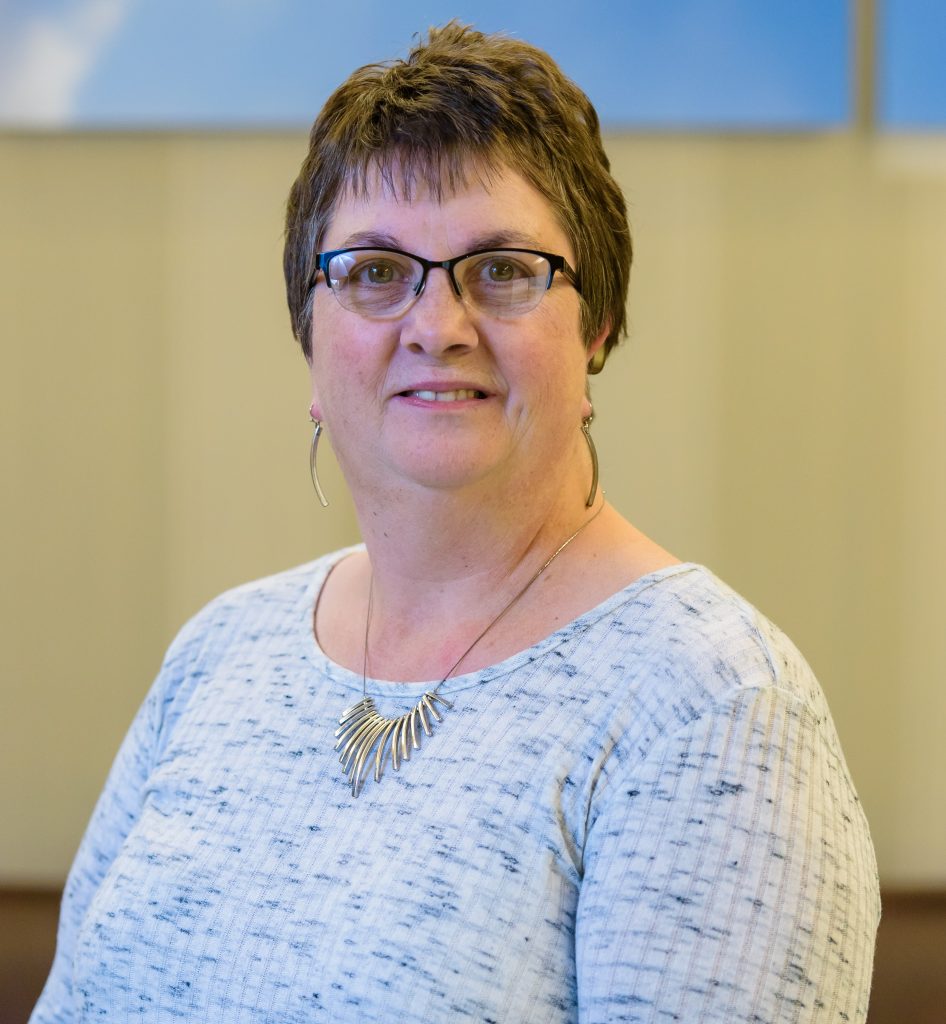
At 10 years old, Kim Russell was diagnosed with a chronic ear infection that could not be helped with antibiotics. She underwent a mastoidectomy to remove the infection, resulting in permanent hearing loss in her left ear. Her mother, having had the same issue when she was younger, also lost her hearing and therefore single-sided deafness (SSD) was a normal part of life in her family.
“School, work and social situations were hard, and the options were not as robust as they are now,” Kim said.
Kim became accustomed to living life with one good ear and didn’t receive intervention or aid until she was 25. Her job had hearing aid coverage and she looked into what options were available for her hearing loss. She discovered BiCROS hearing aids and wore them for 30 years. Although the hearing aids helped, no solution is perfect. Crowds were still difficult and loud places like bowling alleys and restaurants made it impossible to hear people speaking and know where sound was coming from. Her audiologist had never mentioned any other options, so she believed BiCROS was the only type of hearing loss solution available to her.
A chance encounter with a bone anchored hearing system
Kim stumbled upon a bone-anchored hearing system (BAHS) on Facebook when a friend happened to post a video at the right time. “One day on Facebook, a friend of mine who is a nurse posted a video on her Facebook page and normally it wouldn’t be anything I would pay attention to. It was something about a surgeon performing a surgery for the first time in West Michigan. They were doing a MIPS procedure (Minimally Invasive Ponto Surgery). He’s the only MIPS surgeon in this part of Michigan and they mentioned single-sided deafness. I did some research and realized this was for people like me!”
Kim searched for the name of the doctor’s office online and learned it was located in the building next door to her dentist. She scheduled an appointment, and learned she was a great candidate for the Ponto System. After trialing a Ponto BAHS on a softband for a week she had the MIPS surgery in July of 2018 and received a Ponto 3 SuperPower. “It was easier than a dental procedure. I was in, out, dressed and drinking coffee in about 58 minutes,” she said.
A new world of sound emerges with the Ponto 3 SuperPower
After Kim’s MIPS procedure and Ponto 3 SuperPower activation a new world of friends, advocacy, and interaction opened up to her.
“For the first time since getting my Ponto, I went for a walk with a friend. I’ve always kept people on my good ear (right side) so we put her on my left to see what would happen. I about jumped out of my skin. Her voice was clear and crisp, even with the radio blaring in the background.
The sound quality from trying the Ponto on a softband vs. an abutment is so much better, so crisp. I call it ‘organic’,” she explained.
As Kim has learned more about Ponto and become more involved in the hearing loss community, she has learned just how important advocacy is. “How did I go so long being hearing impaired and not knowing there were other options? This BAHA World Hearing Facebook group was where I received most of my education. It’s important for people to look into all of their options, and do their research.”
Kim’s advocacy and education came full circle last year after she attended Oticon Medical’s yearly advocacy conference. She met fellow Ponto users and collaborated with Oticon Medical staff.
“Before, I had never told anyone I wore any kind of hearing aid. This time, as soon as I got my abutment I shared it on Facebook because it’s important to get the word out. Knowing what was available made a difference in my life. Every now and then I notice the crispness of something I haven’t heard before. I hope advocacy and sharing my story can do the same for someone else.”
Find a clinic
Click the button if you want to learn more about our Ponto bone anchored hearing systems or arrange a trial.

 After a slow progression of hearing loss in her right ear, Elizabeth Collins became permanently deaf on her right side from a mastoidectomy surgery at the age of 14. She has lived with single-sided deafness (SSD) for most of her life, struggling to hear in school and at work.




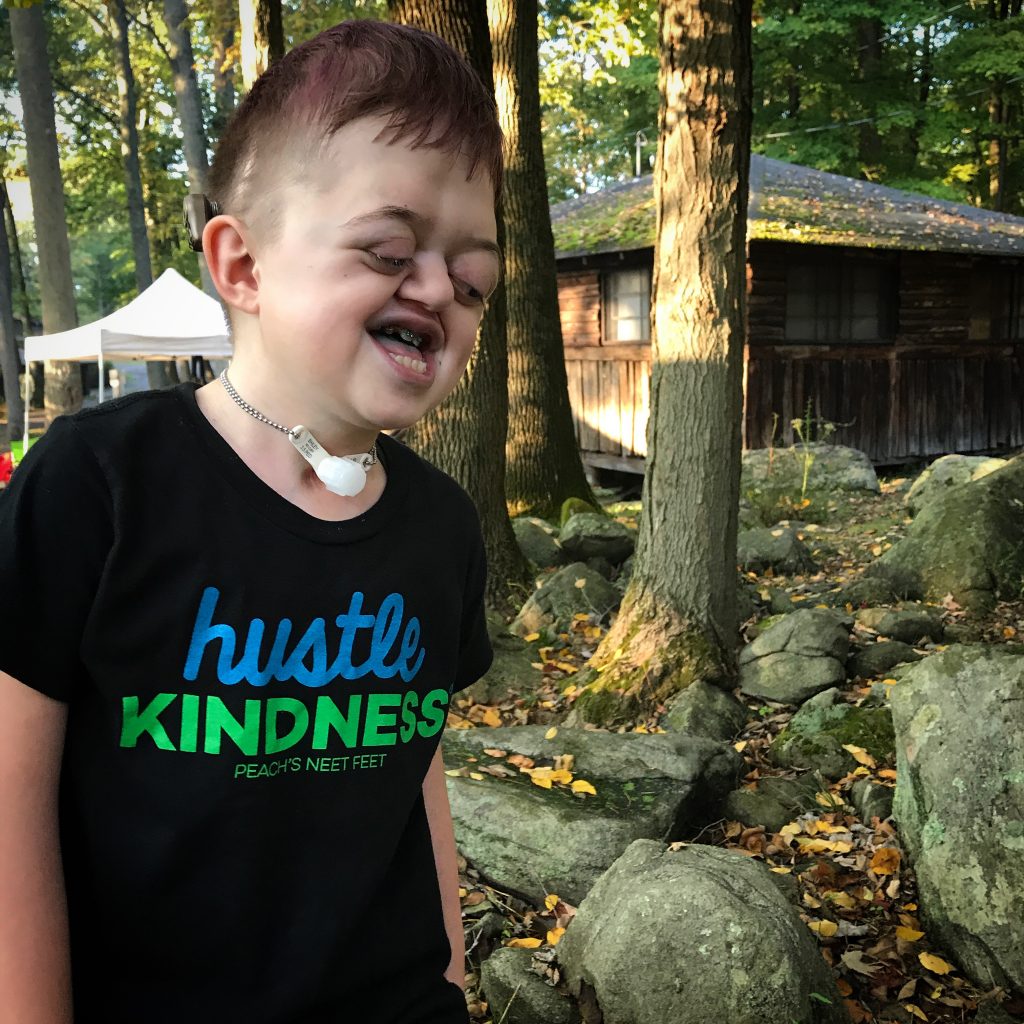
 Nova hiking


 children, 16 of whom had conductive hearing loss and one with single-sided deafness (SSD). She initially tested the children with the Ponto Power fitted on softbands. Prof. Pittman had the children listen to and learn six new made-up words and assessed the number of repetitions required before each child learned the words. Then she repeated the test, only this time with the Ponto Power affixed to the children’s abutments. The results were significant — it took the children approximately 166 trials to learn the words when sounds were transmitted through the skin via the softband yet only 60 trials when sounds were transmitted directly through the attached devices. That’s an impressive 2.5 times increase in learning speed!

 Denmark to assess how Ponto aids in improving memory. Participants in the study included 16 adults in their late fifties with conductive or mixed hearing loss. Again, the subjects were first tested wearing their Pontos on softbands only. Their assigned task was to recall seven words after listening to sentences including each word individually. The results showed the subjects remembered the words at a rate of approximately 46 percent. However, when they wore their Pontos on their abutments and were tested again, that number rose to a significant 52 percent. This means wearers experienced a 13 percent relative improvement in ability to recall with direct sound transmission vs. skin transmission — likely because fewer mental resources were needed to process the signal, and so more can be devoted to memory.

 headquarters in Denmark. Participants consisted of 21 adults in their late 50s with conductive or mixed hearing loss. They were tested using three different processors with different maximum outputs: Ponto Pro, Ponto 3, and Ponto 3 SuperPower. Participants were tasked with listening to and repeating sentences heard through background noise, while an eye-tracking camera monitored their pupil dilation, an established measurement of listening effort wherein the pupil dilates in direct relation to the amount of listening effort expended. Our researchers compared the performance of the subjects using each device and noted a sizeable decrease in listening effort and retention with use of the Ponto 3 SuperPower as indicated by reduced pupil dilation as compared to the Ponto Pro and the regular Ponto 3. This supports the idea that higher power hearing systems allows wearers to comprehend speech with significantly less effort.


 Working as a CardioThoracic nurse for 27 years, Iris had become accustomed to noisy environments. However, after the removal of a glomus tumor and cholesteatoma, she found herself with conductive hearing loss and challenged to perform her work duties. She began searching for a solution and found the Ponto 3 SuperPower.